

Pelvic masses/Tubo ovarian masses:
Tubo-ovarian abscess (TOA) is a serious complication of acute pelvic inflammatory disease (PID), which most commonly results from the spread of bacteria from the lower genital tract. It is a polymicrobial infection typically occurring in young sexually active women
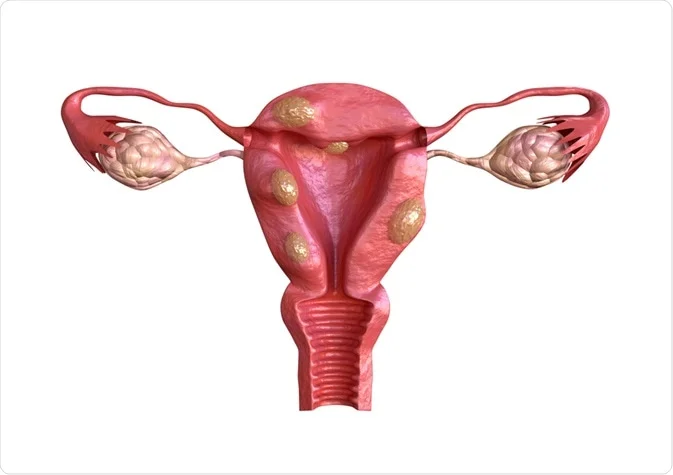
Fibroids range in size from seedlings, undetectable by the human eye, to bulky masses that can distort and enlarge the uterus. You can have a single fibroid or multiple ones. In extreme cases, multiple fibroids can expand the uterus so much that it reaches the rib cage and can add weight. Many women have uterine fibroids sometime during their lives. But you might not know you have uterine fibroids because they often cause no symptoms. Your doctor may discover fibroids incidentally during a pelvic exam or prenatal ultrasound
Type of mass in the female reproductive tract tends to vary by age group:
• In infants, in utero maternal hormones may stimulate
development of follicular ovarian cysts in a fetus or during
the first few months of life. This effect is rare.
• In children, prepubertalmasses are uncommon. Ovarian masses
may be follicular ovarian cysts or, rarely, benign or
malignant tumors.
• In women of reproductive age, the most common cause of
symmetric uterine enlargement is pregnancy. Another common
uterine mass is a uterine fibroid, which sometimes extends to
the cervix or uterine connective tissues. Adnexal masses are
often related to the menstrual cycle; they include follicular
ovarian cysts (follicles that develop normally but do not
release an egg) and corpus luteal cysts. These cysts often
resolve spontaneously within a few months. Adnexal masses may
also result from ectopic pregnancy, ovarian cancer, fallopian
tube cancer, benign tumors (eg, benign cystic teratomas),
endometriosis, hydrosalpinges, or a tubo-ovarian abscess.
• In postmenopausal women, a new or growing pelvic mass is
more likely to be cancerous. Many benign ovarian or uterine
masses (eg, endometriomas, adenomas, fibroids) depend on
ovarian hormone secretion and thus do not develop or enlarge
after menopause. Metastatic cancer of the breast, colon, or
stomach may first manifest as an adnexal mass.